Rwanda Launches Training to Strengthen the Handling of Asylum Appeals
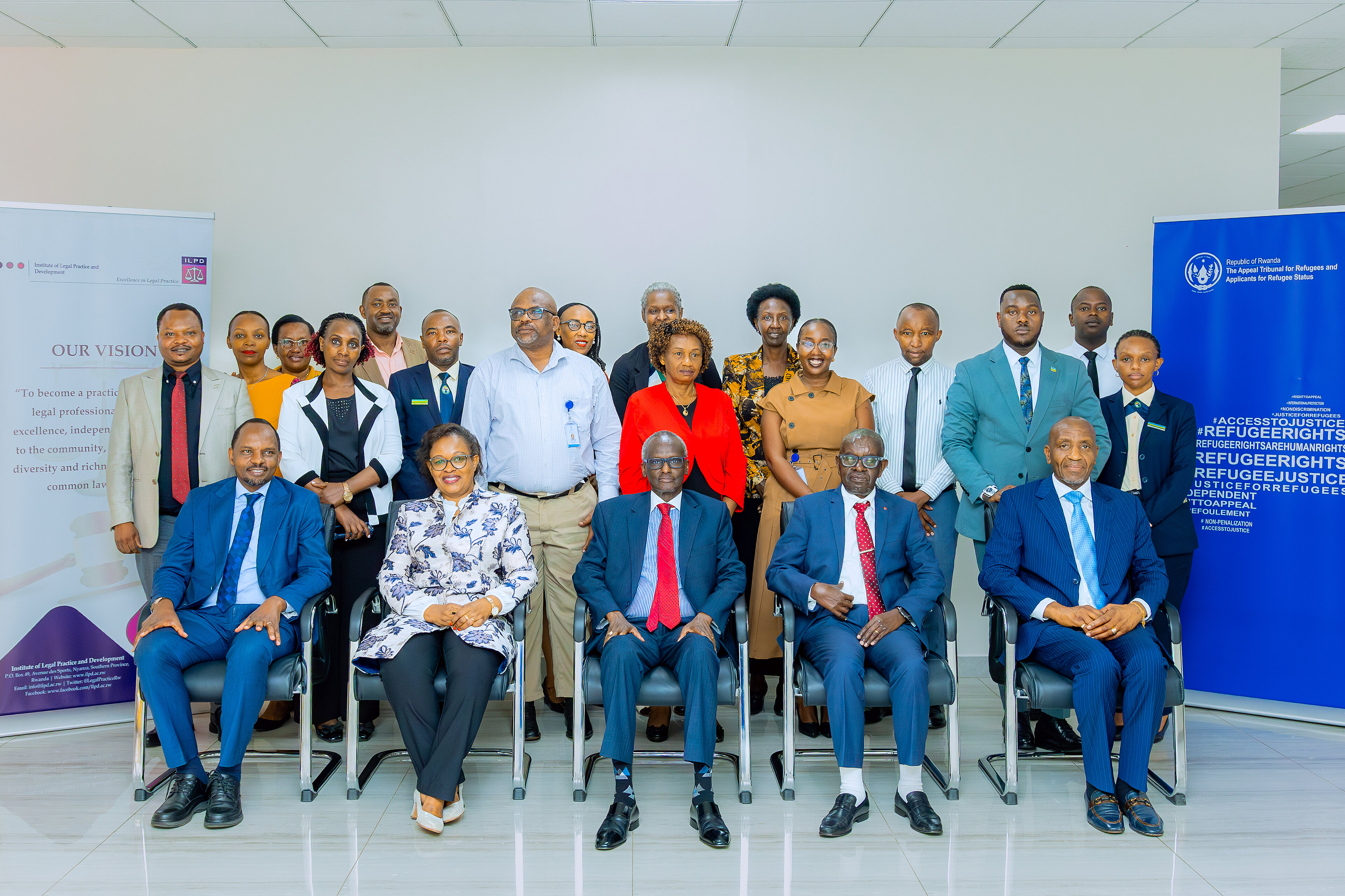
The Institute of Legal Practice and Development (ILPD) has launched five-day training on Refugee Status Determination (RSD) and Refugee Appeals Adjudication for members and staff of Rwanda’s Appeal Tribunal for Refugees and Applicants for Refugee Status. The training aims to strengthen their knowledge and capacity and to ensure fair, consistent and legally sound decision-making.
The training began on Monday, 16 November 2026, in Kigali and runs until 20 November.
Speaking at the opening, the Tribunal’s Co-President, Ambassador Edda Mukabagwiza, said the training is “in many respects, a continuation of the journey we began in Nyanza in March this year.”
“The first training was a success,” she said. “It strengthened our foundational understanding of refugee law and protection while generating considerable interest among members and staff, many of whom were relatively new in their respective responsibilities. It also provided an important opportunity to appreciate the complexity of refugee status determination and the demands of the adjudication function.
“We now return for this second phase with greater institutional experience, a clearer appreciation of our responsibilities and, importantly, practical questions arising from our work.
“We therefore expect this training to take us a step further: from foundational knowledge towards deeper understanding, stronger analytical capacity and greater confidence in applying the relevant legal and procedural standards,” she added.
The Rector of ILPD, Dr Aimé Muyoboke Karimunda, described the training as particularly important, noting that three experts with extensive experience in international refugee law, including specialists from Kenya and France, had been selected to facilitate the sessions.
Dr Karimunda said supporting the Tribunal falls within ILPD’s mandate to strengthen the justice sector. He noted that the Tribunal is the newest institution in the sector and that the Institute has received strong guidance from the Minister of Justice in overseeing its growth.
He said that engaging international experts reflects ILPD’s innovative approach to professional training, which combines theoretical instruction with practical exercises so that participants can apply what they learn.
“Our approach to delivering training involves first equipping participants with foundational knowledge, followed by practical exercises. This ensures that by the time they leave here, they will be able to put what they have learned into practice, drawing on the approaches demonstrated by their trainers,” he said.
Dr Karimunda reaffirmed ILPD’s commitment to supporting the Tribunal’s leadership in whatever way is necessary. He said this includes developing a sustainable programme, particularly for young people who may wish to practice in the field of international refugee law.
The training covers the assessment of asylum applications, the evaluation of evidence and the determination of appeals lodged by individuals dissatisfied with decisions on their applications for refugee status. Topics include the legal requirements for recognition as a refugee, the grounds for granting or revoking refugee status, and the analysis of Country of Origin Information (COI) to establish security conditions and the general situation in applicants’ countries of origin.
Special attention is given to conducting interviews with asylum seekers sensitively and appropriately, particularly in cases involving children, persons with disabilities, survivors of gender-based violence and victims of torture. Participants are also learning to assess the credibility of information provided by asylum seekers, evaluate different forms of evidence and make decisions based on facts and applicable legal principles.
Ultimately, the training seeks to strengthen the independence, fairness and integrity of the Tribunal’s decision-making, ensuring that appeals are handled consistently, impartially and in accordance with Rwandan legislation and international standards.
The Tribunal was established in April 2024, its members were appointed in March 2026, and it began hearing appeals in October 2026.