Rwanda Advances Child-Friendly Justice at National Symposium on Child Rights Protection
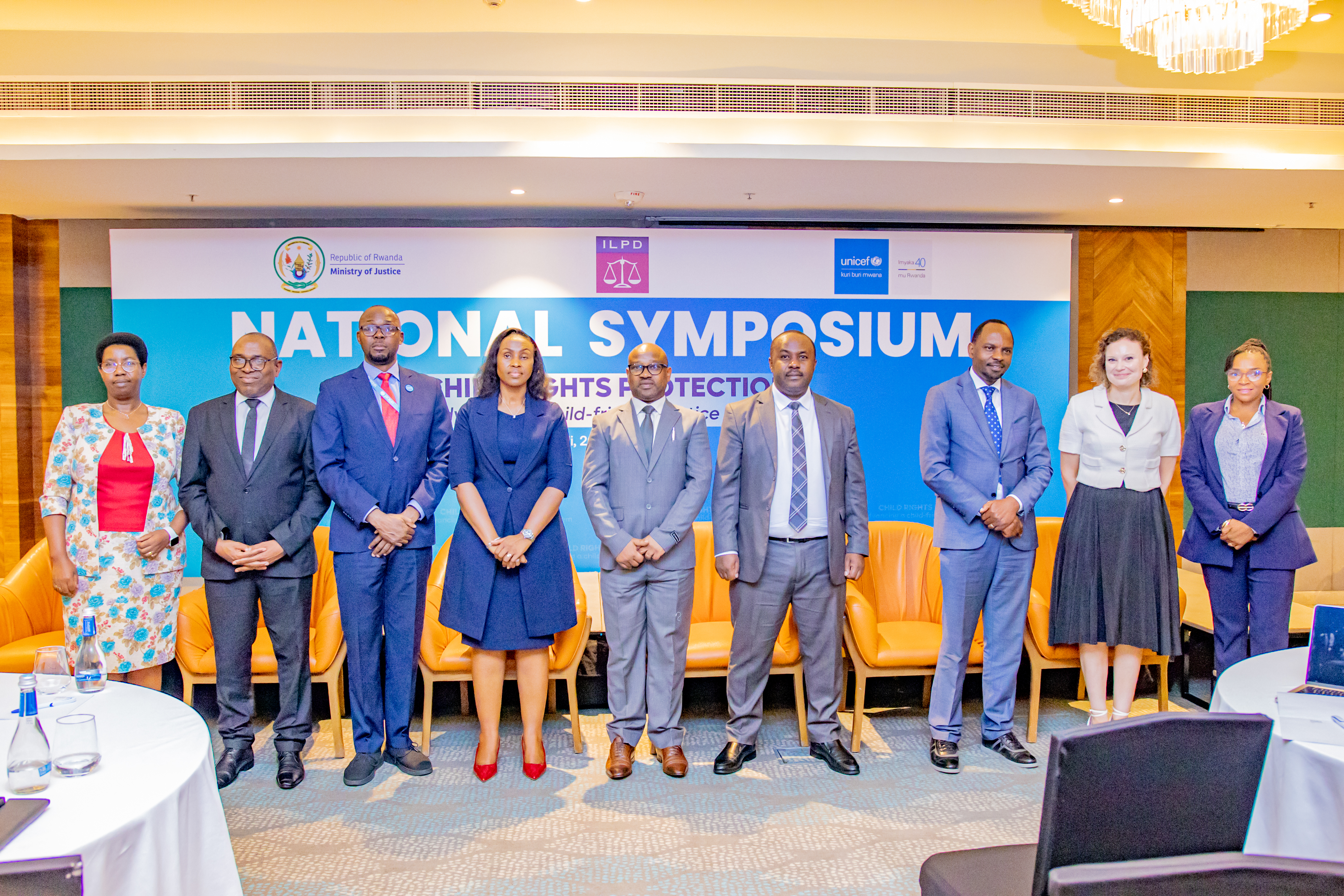
On 26–27 February 2026, the Institute of Legal Practice and Development (ILPD), in partnership with UNICEF, convened the National Symposium on Child Justice at Four Points by Sheraton - Kigali.
Held under the theme “Child Rights Protection: Advancing a Child-Friendly Justice System,” the two-day symposium brought together senior government leaders, members of the judiciary, prosecutors, investigators, correctional services officials, civil society organizations, development partners, and academia to reflect on Rwanda’s progress and define actionable reforms to strengthen child protection within the justice system.
In his opening remarks, Dominic Muntanga, UNICEF Representative (O.I.C.), described the symposium not merely as a gathering, but as a “national promise”; a promise rooted in Rwanda’s Constitution that guarantees every child special protection by the family, the community, and the State.
He emphasized that justice for children must be protective, compassionate, and intentional. It must see not just a case, but “a child becoming.” Marking 40 years of partnership between UNICEF and Rwanda, he commended the country’s leadership in advancing child rights while calling for strengthened diversion mechanisms, trauma-informed justice practices, and detention strictly as a measure of last resort.
“Justice delayed for a child,” he noted, “is childhood interrupted.”
Delivering the keynote address, Honorable Theophile Mbonera, the Permanent Secretary/ Ministry of Justice reaffirmed that a child-friendly justice system is not optional it is a constitutional, legal, and moral necessity.
He highlighted Rwanda’s commitments under international instruments, including the Convention on the Rights of the Child and the African Charter on the Rights and Welfare of the Child, and emphasized the need to: review and strengthen child justice laws and procedures; institutionalize the best interests of the child at every stage of proceedings; improve child-friendly infrastructure within justice institutions; expand access to legal aid so that no child faces the justice system alone.
“A justice system that fails its children undermines its own legitimacy,” the Permanent Secretary stated. “But a justice system that protects children builds trust, strengthens families, and contributes to safer communities.”
The Symposium resolved that advancing a truly child-friendly justice system in Rwanda requires immediate strengthening of diversion and restorative justice mechanisms to ensure detention remains a measure of last resort; expansion of access to quality, child-sensitive legal aid across all districts; institutionalization of trauma-informed and best-interest-of-the-child principles at every stage of proceedings; enhanced coordination between justice, social protection, and community actors; increased investment in capacity building for judges, prosecutors, investigators, and social workers; improved data collection and monitoring systems to inform evidence-based reforms; and stronger engagement of parents, families, schools, and communities in preventive interventions aimed at addressing risky behavior before children enter the justice system.
In his closing remarks, the Vice Rector in charge of Academic Affairs and Research at ILPD emphasized that child-friendly justice is not a theoretical construct but a practical standard reflected in laws, procedures, institutional practices, and post-justice care.
He underscored that diversion and restorative justice are not alternatives to justice; they are essential components of an effective and humane system.
The symposium concluded with a renewed commitment from all stakeholders to translate recommendations into concrete reforms and measurable improvements for children across Rwanda.
